
- Home
- Occupational Therapy
Audiology


4.9 Clients Rating
Lorem ipsum dolor sit amet

Hear Clearly. Communicate Confidently. Stay Connected.
Professional Audiology assessment and hearing-care support for children and adults experiencing hearing difficulties, unclear sound perception, delayed auditory responses, or changes in hearing.


Problem
Hearing Difficulties Are Easy to Miss Until They Start Affecting Everyday Life
Hearing problems do not always begin with complete hearing loss.
A child may frequently miss instructions, respond only when called from nearby, increase the volume on devices, struggle to follow conversations, or appear inattentive in class.
Adults may notice that conversations sound unclear, people seem to be mumbling, phone calls become harder to understand, or background noise makes communication increasingly difficult.
Sometimes these signs are mistaken for attention, behaviour, or communication problems when hearing may be contributing to the difficulty.

Clear communication starts with understanding how well you hear.
An Audiology assessment helps understand how well a person is hearing and processing sound so the right next step can be recommended.
Signs It's Worth a Closer Look
What You Should Do
Three Things Worth Doing This Week
Notice When Hearing Seems Difficult
Pay attention to situations where hearing problems are most noticeable such as conversations, phone calls, television, classroom instructions, or noisy environments.
Specific examples can help the Audiologist understand the concern more clearly.
Observe Responses to Everyday Sounds
For children, notice whether they respond consistently to their name, environmental sounds, music, or speech from different distances.
For adults, look for changes such as turning one ear toward a speaker, increasing volume, or avoiding conversations in noisy places.
Get Hearing Assessed Instead of Guessing
If hearing difficulties are persistent or affecting communication, learning, work, or daily interaction, an Audiology assessment can help identify whether hearing is within the expected range and whether further support is needed.
What Happens in the First Assessment
We Start With a Conversation
The Audiologist first understands the hearing concern, relevant medical history, communication difficulties, previous hearing tests, and how the issue is affecting everyday life.
Structured Hearing Evaluation
Depending on age and concern, appropriate hearing assessments may be used to understand how well different sounds and frequencies are being heard. Areas assessed may include: Hearing Sensitivity • Speech Understanding • Middle Ear Function • Auditory Response • Ear-Specific Hearing
Clear Explanation of the Results
The Audiologist explains what the assessment shows, whether hearing appears within the expected range, and whether any further evaluation or support may be useful.
A Clear Next-Step Plan
If a hearing concern is identified, the Audiologist discusses appropriate next steps based on the findings, which may include monitoring, further assessment, hearing support, or referral where required.
COMPLETE THERAPY & REHABILITATION CARE
Don’t Keep Guessing About Your Hearing
If you or your child frequently misses sounds, struggles to understand speech, needs higher volume, or has experienced a noticeable change in hearing, an Audiology assessment can help clarify what is happening and what to do next.
Question Answer
Frequently Asked Question
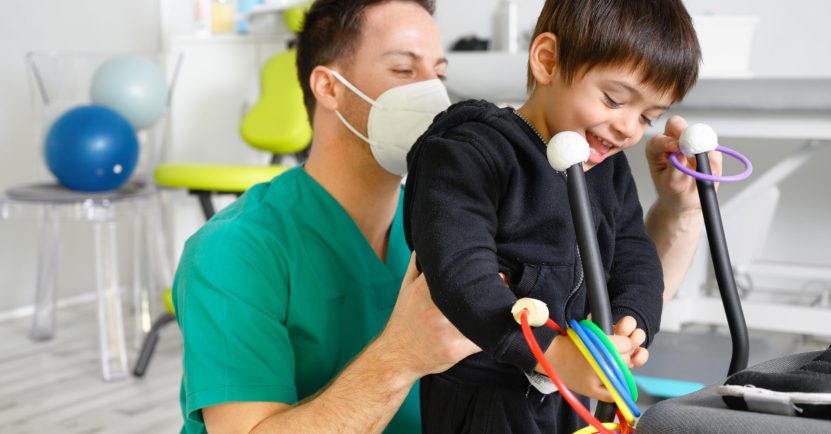
If your child does not consistently respond to their name, frequently asks for repetition, keeps device volumes high, struggles to follow spoken instructions, or has speech and language concerns, a hearing assessment may help rule out or identify a hearing-related issue.
No. Audiology also helps assess mild or gradual hearing difficulties, unclear speech understanding, changes in hearing, and concerns that may not be obvious in everyday situations.
The Audiologist begins by understanding the concern and relevant history, then performs age-appropriate hearing tests. The results are explained clearly, along with any recommended next steps if a hearing concern is identified.
Hearing plays an important role in speech and language development because children learn many sounds by hearing them repeatedly. If a child has speech or language concerns, a hearing assessment may be useful as part of understanding the overall picture.
There is no single schedule that applies to everyone. A hearing assessment may be recommended when symptoms appear, after a noticeable change in hearing, or when advised by an Audiologist or other healthcare professional. Follow-up frequency depends on the individual findings.